Don Santiago, Doña Matilda and Baja’s Rad Scientific Fishers
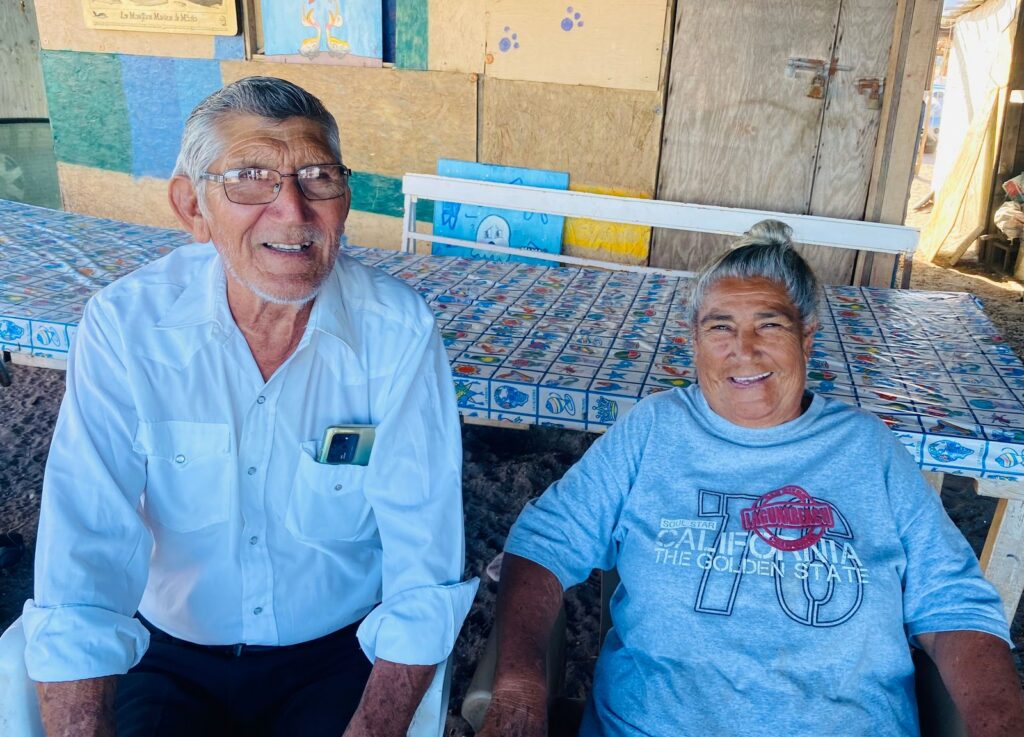
When you first meet Don Santiago and his sister Doña Matilda at their home in the Las Pacas fishing cooperative outside of La Paz, there is nothing to suggest that they are radical agents of change. Las Pacas looks like a place that time forgot, and Santiago, age 67 and Matilda, age 72, seem as eternal and constant as the mountains that backstop their home and the ocean that fronts it. Their great grandparents, grandparents, and parents were all fishermen. Together Santiago and Matilda still fish 3 times a week. To save their way of life, they are prepared to turn it on its ear.
“Santiago is a fisherman who doesn’t think like one” says Ana Karina, a professor of Alternative Tourism at the Autonomous University of Baja California Sur (UABCS) in La Paz. “in fact, all the other fishermen think Santiago is crazy.” The fishermen may suspect Santiago’s sanity because he is on a mission to change attitudes towards fishing reinforced across the generations. Says Santiago, “I don’t want my children to say that I was just a predator. It is now time for all of us fishers to give back to the ocean what the ocean has given to us. Life. From this point on I want to dedicate all my time to the students and to the ocean. I don’t want to fish anymore, I just want to do science.”
 The students and science Santiago mentions come from many different places including Arizona State University’s School for the Future of Innovation in Society. Dr. Jesse Senko is the marine biologist and conservation scientist who heads that program. Jesse has a focus on the health of sea turtles, which he sees as tightly tied to sustainable fisheries and resilient coastal communities. Jesse explains the root of his work with Santiago and Matilda. “Fishing gear is the greatest threat to sea turtles worldwide. Sea turtles are vital for the health of the world’s oceans. They perform fundamental roles in ocean ecosystems, many of which are not fulfilled by other species. And humans need healthy oceans to survive and thrive.”
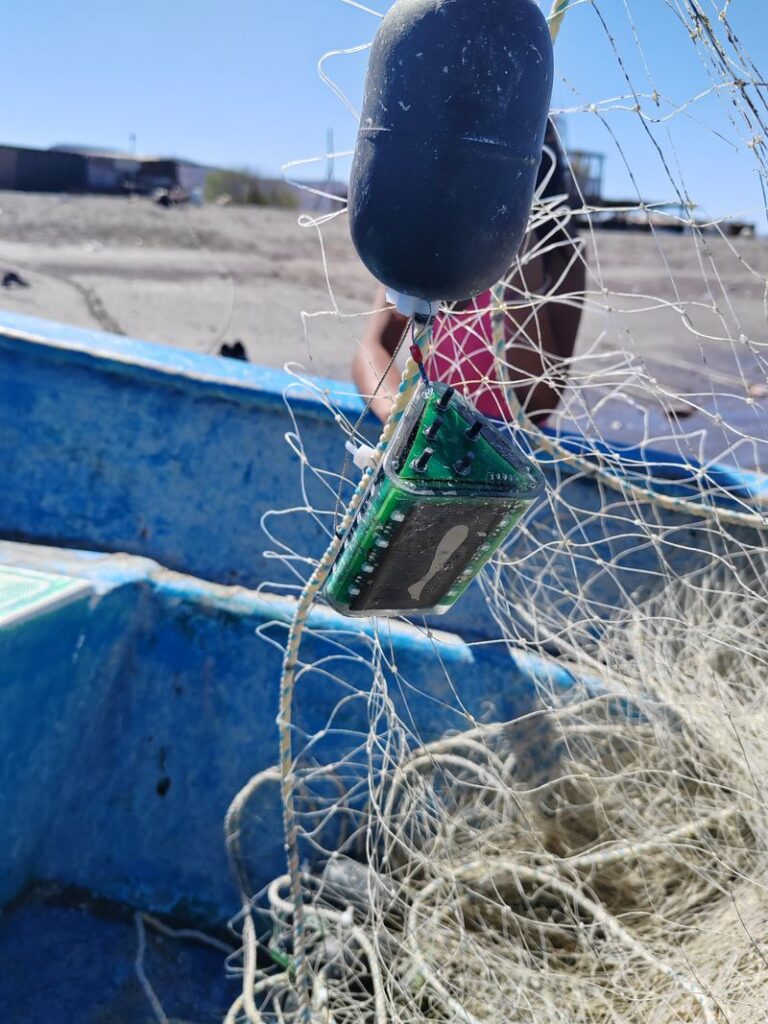
Fishermen in Baja commonly put lights on gill nets to attract fish. While doing research in Baja Jesse noticed that sharks and turtles could see the lights on the nets and turned away from them. To increase the turtle and shark chance of net-avoidance success, Jesse put battery-powered lights on the nets, and quickly saw a 50% reduction in turtle bycatch and 95% reduction in shark bycatch. “The turtles would swim right up to the nets and turn around” he notes. Jesse realized that the battery-powered lights, while effective, were not a sustainable solution; he thought solar-powered fishing lights might be. His engineering colleagues at ASU agreed and created the solar-powered solution he envisioned. Jesse began testing the nets with the Cuevas brothers at El Pardito (see JDP Holiday 2020-2021 edition #46) and was strongly encouraged by the results; the nets work. They now have the potential to be a radical game changer in the global fight to reduce bycatch, and it was his quest to expand his research that led Jesse to Santiago and Matilda’s door.
Stephanie Rousso is a Ph.D. candidate at CICIMAR in La Paz who has dedicated her career to the study and care of sea turtles. She has been working in sea turtle conservation and sustainable fisheries in Baja California Sur for over a decade, and met Santiago and Matilda through her work in reducing turtle bycatch. Santiago and Matilda began calling Stephanie whenever they saw a stranded sea turtle or caught one in their nets, and Stephanie taught them how to capture data about the turtles and safely release them back to the ocean. They now handle these tasks efficiently and effectively on their own, all while providing important data for Stephanie’s research to aid the turtles. When Jesse approached Stephanie about fishers he could work with, Stephanie didn’t hesitate. “Santiago and Matilda are amazing citizen scientists. They are all about the science now” she states.
Jesse could not be more pleased with the collaboration in which he is testing his lighted gill nets for global solutions using different colors, wavelengths, depths and even sound. “My team and I are working with Don Santiago and Doña Matilda to reduce bycatch while improving fisheries sustainability. We are still in the preliminary stages of research, but we believe that Las Pacas will be one of our most globally important study sites.”
 Another of Santiago’s dreams is to create a fish refuge in his area. To this end he has already worked with the government to create an artificial reef using special technology donated by Japan, and he is hoping to get 10 hectares declared a fish refuge in which only local fishermen can catch commercial-size fish using handlines. The rest of the fish will be left alone to mature and repopulate the area. “Fish refuges often don’t work because the local fishermen aren’t well informed about them,” notes Santiago. “I want to change that. All along the Baja peninsula coastal communities are dying. There are only old people like me and Matilda left. I want to continue to connect with students and scientists so that our young people can carry on with this life in a way that is sustainable and revitalizes coastal life.”
Says Jesse, “Don Santiago is a visionary. He is not only interested in improving the sustainability of his own fisheries, but he is interested in developing solutions that coastal communities throughout the region can adopt. Through their partnership with our research program, they are helping pave the way for the next generation of scientific fishers. Their work will not only help advance sustainable fisheries in Baja California Sur, but their community can serve as a global model for responsible fisheries.”
Santiago is all about getting students invested in a vision for a more vibrant future of Baja’s coastal areas. Ana Karina is the UABCS professor of Alternative Tourism who brings many of her students to learn from and work with Santiago and Matilda. “Santiago is the kind of person who says, ‘If I knew that the world was going to end tomorrow, I would still plant a tree today.’ He works with the students on ideas for regenerative tourism that can reduce the impact on our fragile local ecosystems.”
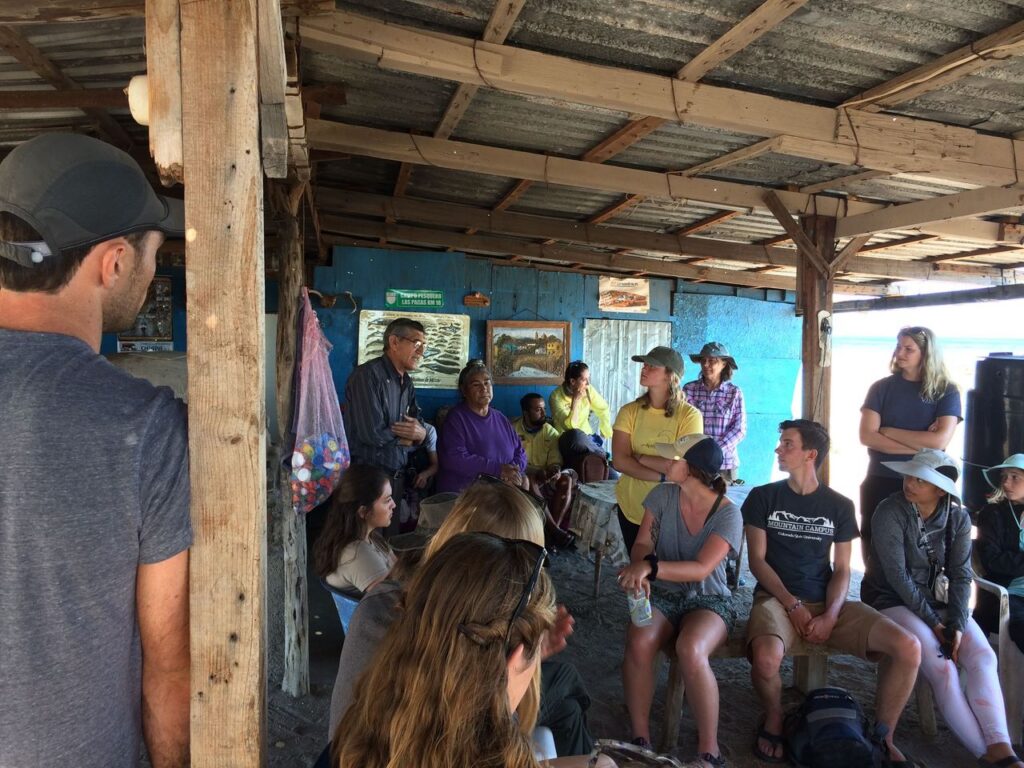
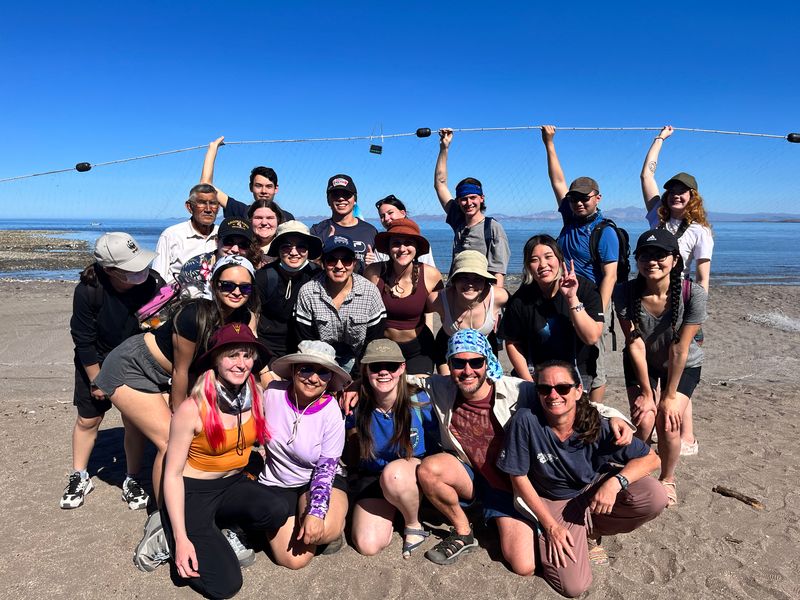 “Don Santiago and Doña Matilda have been hosting my ASU study abroad class, “Sea turtles, sharks, and fisheries of Baja California”, at Las Pacas over the past 2 years,” says Jesse. “During their time at Las Pacas, ASU students learn in detail from Don Santiago about how his community fishes, what gear they use, and how they are working to advance responsible fisheries.” Las Pacas and its inhabitants are a living classroom, where students from Baja, Arizona, Colorado, California and elsewhere learn what it means to radically change your way of life, to save your way of life. “We are fishermen of excellence” says Santiago. “Our neighbors wonder why we are spending time with all these ‘green people’. It’s simple. I want my children and grandchildren to have the same opportunity I had to make a living from the ocean. I am therefore dedicating my time to science and to the students. This will be my testimonial.”
This article is based on interviews with Santiago, Matilda, Ana, Stephanie and Jesse, as well as the Arizona State University News 2020 article, ASU scientist Jesse Senko’s solar-powered lights are rescuing more than sea turtles from fishing nets — they’re helping to transform the future of sustainable fishing.