Todos Santos Eco Adventures Climate Action Partnership with Tomorrow’s Air
We’re thrilled to share our passion for eco-friendly tourism practices, and lately, we’ve taken our promise to protect the environment to new heights by renewing our commitment to Tomorrow’s Air as an Education Partner. Tomorrow’s Air is educating and inspiring a global travel collective to clean carbon dioxide from the atmosphere and store it permanently. We are proud to be supporting and advocating for climate action education and accelerating the development of carbon removal with permanent storage.
We understand that alongside conventional carbon offsetting and natural climate solutions, new carbon removal and storage approaches are also needed to help us clean up the trillion tons of excess carbon dioxide in the atmosphere. The reality is that even if all carbon dioxide emissions were to halt completely right now, Earth’s warming would continue due to the high levels of carbon dioxide already stored in the atmosphere. The only way to permanently reverse warming is through carbon removal.
Therefore, in May 2023, Todos Santos Eco Adventures made an investment in Tomorrow’s Air. The Todos Santos contribution supports:
Inspiring traveler education about meaningful climate action
An order for 3 tons carbon to be removed and permanently stored
Through this partnership, we’re actively educating visitors about carbon capture technology and the role it plays in preserving our planet. Our knowledgeable staff share examples of carbon capture technology, promoting the importance of this initiative.
Curious about how it works?
The Tomorrow’s Air portfolio of carbon removal innovators includes pioneering companies selected for their technical and hybrid nature-tech solutions that can help restore our climate: direct air capture company Climeworks, Pacific Biochar, and Eion enhanced weathering.
Payments received from individual travelers and travel companies like Todos Santos Eco Adventures support climate conscious travel education and directly fund carbon removal provided by these companies.
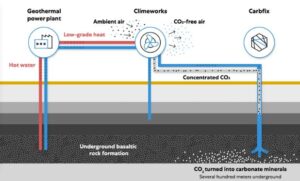
With direct air capture, carbon collectors capture carbon dioxide from ambient air. Air is drawn into the collector with a fan, and adheres to a filter within the collector. Once the filter is saturated, the collector is closed, and the temperature is increased, releasing pure carbon dioxide. The carbon dioxide is dissolved in water, just as a soda machine makes sparkling water.
This water mixed with carbon dioxide is then injected deep underground into basaltic rock in Iceland. The basaltic rocks release metals that mix with the carbon dioxide in the water and turn this carbon dioxide into stone. The process safely and permanently removes carbon dioxide from the atmosphere since rocks cannot leak out of the ground. The entire process is powered by geothermal energy.
Todos Santos Eco Adventures travelers are encouraged to share their personal travel stories and perspectives with the Tomorrow’s Air community and are invited to
Our commitment to sustainability extends beyond our support of Tomorrow’s Air, as we firmly believe in minimizing the environmental impact of our tours. We use reusable water bottles, purchase local foods and products, and minimize single-use plastic wherever possible. Our responsible waste management practices ensure that we leave behind as little waste as possible, allowing future generations to enjoy the beauty of Baja. Our tours offer unique experiences, including hiking, whale watching, and farm-to-table cooking classes, all of which are designed to promote sustainable tourism. We believe that tourism goes hand in hand with sustainability and hope to inspire others by setting an example through our eco-friendly initiatives.
Reclaiming the Soil: Regenerative Farming in Baja California Sur
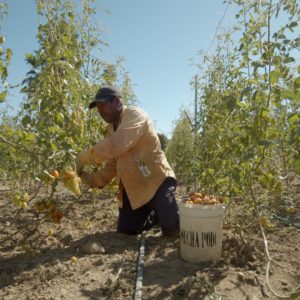
50-year old Felipe Fisher is a successful Baja California Sur farmer who still works the 1.5 hectare-ranch in San Jose Viejo that his great grandparents established in 1901. He started working with his father on the ranch when he was 15 and they, together with the 132 farmers that comprise Productores Organicos del Cabo cooperative, have built a successful business exporting organic basil and cherry tomatoes to places as far-flung as Singapore, Japan, the United States and United Arab Emirates. “But it’s not just the organic farmers who are exporting,” explains Felipe about a startling Baja reality, “Most of the fruit and vegetables that you buy in Costco, WalMart and the large grocery chains in Baja Sur actually come from Sinaloa or other parts of Mexico.”
This head-spinning fact caught the attention of Alianza Para la Seguridad Alimentaria (ASA) when it conducted an assessment of agriculture and the local food system during the pandemic. Conducted in collaboration with the International Community Foundation, the survey confirmed what Felipe and the rest of the Baja Sur farming community long knew to be true: almost all of the fruit and vegetables grown in Baja California Sur are exported, and almost all the produce we buy locally in Baja Sur is imported from Guadalajara, Tijuana and Sinaloa.
“Why is the global food system the way it is?” queries Kelsey Bearden, ASA’s Coordinator for Agroecology and Local Economy. “At one point it made economic sense to grow things here and ship them elsewhere, but the pandemic demonstrated in harsh terms that these distribution and supply chains are not as stable as was once thought. In fact, our assessment showed that Baja is extremely vulnerable from a food security perspective. We find ourselves with a rapidly growing population right when our food supply system is being vastly disrupted.”
Kelsey and her team are making haste slowly to diffuse this ticking timebomb. Their goal is to facilitate changes in the way farming has been done in Baja Sur since the 1950s, to realign a system that is reliant not only on exports, but also on imported chemicals for soil productivity. To foster change, they are building a network of support for farmers who are interested both in selling locally and improving the health of their soil to obviate the need for agrochemicals. A pilot project was conducted in La Paz municipality in 2021-2022 which revealed that not only is there a lot of interest from the farmers, but also from those whom they serve including food distributors and chefs. They are encouraged, but there are challenges.
“Baja land is as bad as it gets anywhere” observes Jan Federico William Loeffler Bird, a Mexican-American regenerative farming expert who was born and raised on the Baja peninsula, and is part of ASA’s support network for local farmers seeking change. “So much of the land here has been stripped of all nutrients by full-on chemical, industrial, monoculture farming. Our local soil needs to be rebuilt, regenerated to regain fertility. Soil fertility is the critical foundation of everything: water, biodiversity, community health and well-being.”
Jan recently completed a two-year regenerative farming pilot project on 4,000 square meters of land in Pescadero. One measure of soil fertility is the percentage of organic matter that it contains, and most of the world’s productive agricultural soils have between 3% and 6% organic matter. When the level is below 3% it is much more difficult to have good yields without using fertilizers and pesticides. Farming regeneratively for just two years between February 2020 and July 2022, Jan and his team were able to double the organic matter in the soil from 0.74% to 1.48%, a dramatic improvement. And since 50% of soil organic matter is organic carbon, it turns out that by improving the soil quality Jan’s project also sequestered 18.33 metric tons of CO2, “which is the emissions equivalent of burning 2,062 gallons of gasoline” he notes.
Community health is a key goal in regenerative farming. Dr. Andrei Aguilar is a pathologist who sees a lot of cancer among community members in Baja Sur, much of which he believes is closely tied to the widespread use of agrochemicals throughout Mexico. He wants to stop that cycle in Baja. “Here in Baja we really need to be a part of producing what we are eating” says Andrei. Andrei always loved the ranch owned and operated by his grandfather, then father, and now owns 10 hectares of it near the airport of La Paz. He and his wife Gabriela Huerta have fully embraced the regenerative farming techniques taught by Jan and other members of the ASA network. Says Gabriela, “It is amazing that we cannot find good quality, chemical-free produce in a place like La Paz. Our vision for our family and friends is a wholly self-sufficient ranch where we can grow our own food.”
Revitalizing soil comes down to mimicking nature’s processes. “When left to its own devices, nature always covers soil with living plants to generate soil health” says Jan. Andrei and Gabriela, like Jan, therefore started their project with “cover crops” like sunflowers, mesquite trees and fruit-bearing trees like guayabas, bananas, and figs. (Jan also includes corn, sorghum, oats, mustard, mung beans and more). Cover crops, which are dispersed among cash crops, “contribute to soil fertility by improving soil structure with their root systems, recycling nutrients, and accumulating organic matter” says Jan. Just a few months after their cover crops were in place Andrei and Gabriela introduced other crops including lettuce, cucumbers, pumpkins and many others. A large variety of plant species helps defend against pests and diseases while improving the soil structure, which in turn improves the soil’s ability to retain water.
“The magic appears at the end when you have a pumpkin with no chemicals,” says Gabriela. “It appears when your cucumbers this year are so much better than the year before. But you have to have a vision and you have to be patient. You have to know that your goal is to be producing healthy, chemical-free food for your family and community and that it may take 2-3 years to get there. What we’re doing with Jan and the ASA is revolutionary for Baja.”
Revolutionary? Definitely. But is it profitable? “Yes, on many levels” states Jan. “The economics of regenerative farming are clear and compelling. You have greater output based on fewer inputs. Regenerative agriculture is roughly 2 to 4 times more productive than traditional agriculture, meaning that much more food can be grown per acre, and at a lower cost.” Forbes magazine agrees. In a January 2020 article, Forbes cited the results of a Ecdysis Foundation study on how regenerative systems affect yields, pests and profitability. “…farms with regenerative practices were 78% more profitable than conventional plots. This increase in profitability was the result of two main factors: input costs and end markets [as] regenerative farmers received higher premiums for their crops….But the benefits go beyond fertilizer costs. Increasing soil organic matter also increased the diversity of insects found in the soil. Insect diversity has been shown to decrease harmful pest abundance… leading to stronger crops.” Kelsey of ASA also points out that foregoing agrochemicals takes out the huge fossil fuel expenditures associated with mining, manufacturing and transporting the chemicals.
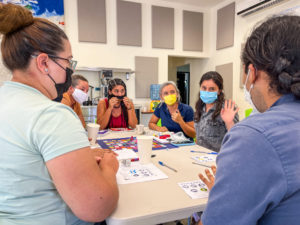
Kelsey outlines some of the challenges ahead, “It’s not just about the farmers and growing the food, it’s about where the food is going, how it gets there and how it’s prepared once it gets there. We are working hard to understand the local food system, who moves the food around, what consumer requirements are and what is the capacity of the local farmers to meet local demand.”
One of ASA’s goals is to generate and facilitate shorter and more equitable supply chains to connect local food to local buyers. ASA is exploring different models for the region, including more direct sales between farmers and buyers interested in local and regeneratively produced food, as well as models that strengthen the logistics of regional sales and distribution.
Ross Vail and his sons Logan and Diego are the owners and operators of Sueño Tropical, the first and largest organic producer in Baja Sur. Their deep experience and knowledge base is another strong link in the ASA farmer support network. “We’ve been working on a food hub concept with ASA over the last two years” notes Logan. “Here at Sueño Tropical we have the set up to pack, process, store and distribute under OSHA standards the products of local farmers using regenerative techniques.” Ross adds, “Our goal is to have enough local, regeneratively-farmed products to meet the demand of all the hotels, restaurants and grocery stores of Baja Sur so that we are truly a local farm to table economy. This will take quite an effort to achieve, but it’s a challenge we embrace.”
Felipe Fisher is totally onboard with the goals of the ASA. “While we built our business on exports, we would rather be producing and selling locally, and providing healthier produce for the people of Baja Sur. There are already several local high-end stores and restaurants interested in our products.”
“I am so proud and happy about what we achieved in Pescadero” adds Jan. “Of course, there is still so much to do, but I’m super excited about this next phase. I’m building out bigger farms and expanding my regenerative farming operation to feed more of the local community.”
The change in outlook and attitude is already taking root with the next generation. Andrei and Gabriela’s daughters, now 3 and 6 years old, both fervently want to be agronomists when they grow up. Andrei and Gabriela will just be happy if their children can live in a Baja Sur community where locally grown, chemical-free produce is the norm, not the exception.
If you would like more information on how to get involved with the ASA as a farmer, buyer, or other interested party, please email the organization at or contact them via WhatsApp a +52-624-125-3283. Be a part of the change!
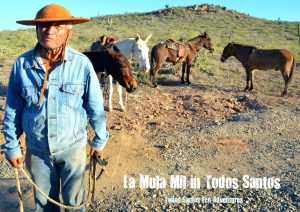
It takes a fair degree of faith in the goodness of your fellow man to hitchhike… with a mule. But that is exactly what Trudi Angell and her daughter Olivia did as part of La Mula Mil, their 1,000 mile mule trip up the Baja Peninsula. One of their mules had taken a respite with friends along the way, and when it came time for him to rejoin the rest of the expedition – now many miles away – Trudi and Olivia just set out along the road with him. Women and mule were picked up by a rancher with a partially empty horse trailer in a matter of minutes, and safely delivered to their camp. Says Trudi, “This was indicative of the type of reception we got from ranch families throughout the entire expedition. They were above and beyond hospitable and helpful. Wonderful meals for us, care for the mules, information on trails – they were generous to a fault with all these things.”
Doña Luz and Don Cata
Fermín Reygadas, a professor of Alternative Tourism at the Autonomous University of Baja California Sur (UABCS) who has worked with Baja California rancheros for over 30 years, is not at all surprised. “The Baja ranchero culture of hospitality is directly connected to the old Bedouin custom that demanded the utmost in hospitality, requiring you to give aid and succor to anyone who asked for it for at least 3 days, even if that someone was your mortal enemy. Of course, you were free to kill him after that, but for those 3 days he was an honored guest in your home.” Bedouins?
Fermín explains. “When Padre Kino first arrived with the Jesuits in Baja California in 1683, pirates were a menace to this new territory of Spain. Padre Kino sold the Spanish king on the idea of Jesuits settling the land and using their own money and means to keep it free of pirates. In return, the Jesuits would have the right to rule without interference from a Spanish-run civil government. The king agreed and the Jesuits set about recruiting soldiers that bore little resemblance to their European counterparts. They didn’t choose people based on their fighting or weaponry skills, but rather people who knew how to raise cattle and plant crops. They didn’t choose typical soldiers looking for new world get-rich-quick schemes, but people seeking a living from the land with a focus on family. The Jesuits chose people whom they considered honorable, trustworthy and capable to protect and settle Baja California Sur.” In short, they chose the people whose descendants make it possible for women to successfully hitchhike around the peninsula with a mule. We’re getting to the Bedouins.
Miguel Martinez. Photo by McKenzie Campbell, Living Roots
Fermín continued, “When the Jesuits arrived in Baja California the indigenous peoples here were hunter-gatherers, skills not suited to building a permanent society. So the Jesuits looked for people who had the ranching and farming skills that could support their missions. These people came from two main sources: 1) people from the agricultural province of Andalusia in Spain, which had been heavily settled by Moors, Arabs and Middle Easterners during the Moorish conquest of Spain in the 8th to 15th centuries, and 2) descendants of the Moors, Arabs and Jews who had been kicked out of Spain during the 15th century Christian reconquest of the country, and had settled in the new world. Not only did these “soldiers” carry the Bedouin tradition of hospitality and honor, they brought Middle Eastern foods to the Baja Peninsula that still flourish to this day including olives, grapes, lentils, date palms and alfalfa.” Teddi Montes, a member of La Mula Mil expedition, took DNA samples from rancheros throughout the trip and her preliminary results show that these middle eastern bloodlines are still found throughout the peninsula, i.e., the Bedouins – along with their hospitality – are alive and well in Baja California!
Ranchero Rule in BCS
The Jesuits ended up being entirely too successful for their own good with their BCS economic model, and they were unceremoniously kicked out of Baja in 1768. The king sent a new administrator who gave the Jesuit mission lands to the “soldiers” who had been working the land under the Jesuits. By this administrative fiat a whole new class of fairly egalitarian land ownership arrived in BCS, and a system of ranches owned and operated by people with excellent skills, a strong work ethic, and a tradition of honor flourished. This was in stark contrast to mainland Mexico, which was heavily settled by Spanish hidalgos, the 2nd, 3rd and 4th sons of wealthy marquis who could not inherit the ancestral lands back home, but who could help themselves to substantial holdings in the new world. “Work ethic” was not a phrase commonly used when speaking of the privileged hidalgos.
By the late 1800s the Baja economy had become centered around mining, with major gold, silver and copper mines flourishing in towns like Santa Rosalia
Chema. Photo by McKenzie Campbell, Living Roots
and El Triunfo. As mining prospered, so did the ranches that supplied them with food, leather goods, horses, mules, and coffee. Mainland Mexico, focused on its own affairs – including wars with the US and France – paid very little attention to Baja for the next 100 years. The result was that the BCS character cultivated by the Jesuits and strengthened by land ownership was left intact, and continued to develop almost completely independently of the rest of Mexico. While mainland Mexico society became highly stratified, Baja California remained a much more egalitarian, independent-minded place, with ranchero families a key and integral part of the peninsula’s economy.
Then mining collapsed in the 1950s, and the ranchero economy went into a tailspin. But the deathblow really came in 1975 when the Mexican government opened its previously closed economy to the outside world. Two territories were declared free ports open to foreign trade: Quintana Roo and BCS. Almost overnight the market for ranch meats, cheeses and leather goods dried up; imported goods could be bought more cheaply and easily in the cities. Ranchero culture was in peril, and made all the more precarious by a school system that requires ranch children to leave home for 9 years and live in boarding houses in towns like Todos Santos, where they steadily lose touch with their culture. As Fermín says, “They watch a lot of TV in the boarding houses, and if their culture doesn’t appear on TV, then they assume it’s not important.” Fermín, Trudi, Olivia and others are trying very hard to change that perception.
Living Roots
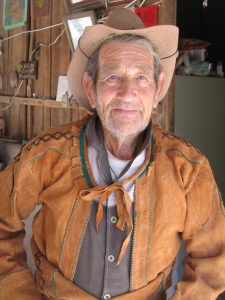
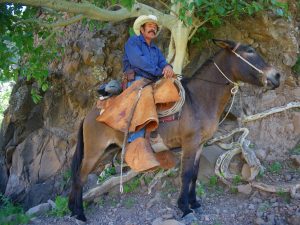
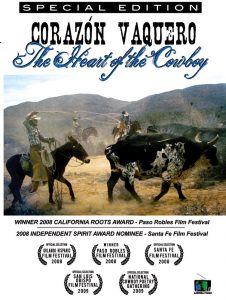
In 2008 a documentary titled Corazon Vaquero – Heart of the Cowboy – won the Paso Robles Film Festival California Roots award. Created by Garry and Cody McClintock and Eve Ewing with Trudi, Fermín and others to showcase the beauty of BCS ranchero culture, the film is centered largely around a family at Rancho San Gregorio in the Sierra de la Giganta above Loreto. In the spring of 2008 a young NOLS instructor named McKenzie Campbell found herself at that same ranch. “I learned how to do leatherwork, make cheese, all kinds of things. I was completely enamored. I then did a week-long scouting trip through the Sierra de la Giganta walking ranch to ranch, and I was completely blown away by the hospitality of the people and their values. They are focused on family, their land and working hard for themselves. They don’t need a lot to be happy. They inspired me to go back to school to get the tools to aid them in the transition to the modern world, to participate in the larger market around them.”
Carlos Ignacio (Nacho) Chiapa with La Mula Mil in Todos Santos
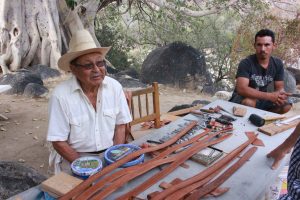
Two years and one MBA later, McKenzie returned to BCS and founded Living Roots, a non-profit with the mission of “Helping an endangered culture adapt and thrive in the modern world.” Focusing on San Javier, the site of one of the Jesuits’ very first missions in BCS, McKenzie set about walking the delicate line between protecting ranchero values and traditions, while connecting ranchero families directly to the marketplace. “They grasped immediately that they had a brand-able concept, but they didn’t see that some of their every day items like ropes and jackets had market value, and we were able to help them see and capture some of that value.” In 2013 Living Roots helped the rancheros establish a cultural center in San Javier that connects them directly with their public. Not only does this place serve as a market for ranch products, but it’s now the base station for many young rancheros who are being trained as guides in order to lead interpretive hikes around the area. In 2014 Living Roots and its ranchero partners also started a farmer’s and artisan’s market in Loreto that sells organic produce, fish and handicrafts. Says McKenzie, “The US and Canadian communities who live in Loreto are hungry for local produce so it’s been quite successful. It is wonderful to see it all progressing so well.”
McKenzie’s next goal for Living Roots is to start a school for young rancheros aged 15-25 where they can learn the old technologies and merge them with the new. Courses are already underway in some schools, with living legends like Dario Higuera, featured prominently in Corazon Vaquero, teaching traditional leatherwork to kids in the local schools. The most popular items to make are wallets and cell phone covers.
Into the Future
35 year-old Rogelio Rosas knows the value of learning traditional skills from his ranching elders. As a child he lived with his grandparents on the family ranch in San Dionisio in the Sierra de la Laguna mountains. Every day he would work alongside his grandfather, learning how to identify and use the 80 edible wild
Don Claudio teaching leatherwork. Photo by Eduardo Boné
plants that grow in BCS, including those with medicinal properties. By the time he was 10 he was helping his grandfather deliver babies and heal the sick throughout the area. When his grandfather died at the age of 116 (leaving 35 children fathered with 5 wives) Rogelio felt compelled to enroll at a seminary in Tijuana. But he didn’t find the answers he expected there, so he joined up with some missionaries and spent the next 6 years traveling throughout Baja, using the healing arts learned from his grandfather to help children around the peninsula.
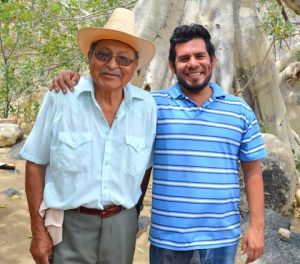
Rogelio found this work rewarding, but he still wasn’t finding the answers he was seeking. So at the age of 28 he moved to La Paz to study philosophy at UABCS, the first member of his family to attend college. While there, he met McKenzie and Fermín who were in the alternative tourism arena, so he added tourism to his list of degrees. By this time Rogelio’s parents, the now-legendary Don Catarino and Doña Luz, had been living at the family ranch for many years, making a very nice living with their organic produce, leather work and other traditional skills. When Doña Luz suffered a snake bite that paralyzed half her body, Rogelio returned to the ranch where he had grown up to help her. By the time he graduated with his double degree from UABCS, he could have joined the majority of his ranching peers and gone off to seek employment in a shinier part of the economy. But he found the pull of the ranch impossible to resist, and is now working with his parents to develop their ranch as a tourist destination where visitors can learn about traditional crafts like leatherworking and cheese-making, hike to see waterfalls and rock art, learn about traditional medicinal herbs, make tortillas from scratch, and enjoy the
Don Claudio and Rogelio
history and culture of the area. This is the future that he sees that will sustain not only his family’s ranch, but those of other families throughout the region.
But like Fermín, Trudi and McKenzie, Rogelio’s real passion is to preserve the heart and soul of ranchero culture. To that end he has created a document that sets forth the principals and values of ranchero life. Working with seven other sons of ranchers who, like him, left home for a while but then returned, he is in the process of creating an association that will keep the rancheros of the Sierra de la Laguna mountains united and focused, adapting to a changing world economy as necessary to thrive, but doing so while maintaining the values and ethics of their forebears, handpicked by the Jesuits. The goal is to remain true to their Bedouin roots. You can count on their hospitality.
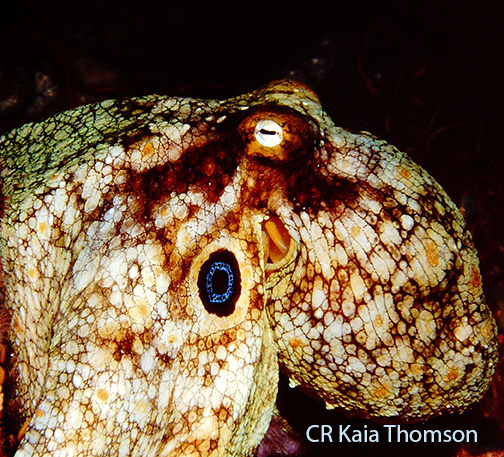
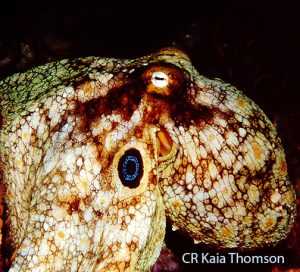
California Two-Spot Octopus, The Pacific Ocean. Photo by Kaia Thomson
There was a thief in the aquarium and no one knew what to do. The institution had just recently purchased 10 Australian Pineapplefish at a price per head that brought tears to the financial officer’s eyes, and now these expensive beauties were disappearing – eerily, quietly, and exactly one fish per night. Management’s initial hypothesis was that night-time employees were seeking to boost their fortunes by selling the fish on the black market, so they set up monitoring stations at employee exits to inspect bags and purses. No pilfered fish were found, and they kept disappearing, one fish each evening. Puzzled, and anxious to protect what remained of their investment, aquarium officials finally decided to set up a camera monitoring system at the Pineapplefish tank to try and catch the thief in the act. Turns out, it was the perfect inside job.
Three tanks away the giant Pacific octopus planned and executed the crime. He figured out how to undo the lock on his tank, walk past the (obviously less delectable) Barrier Reef Anemonefish and Bicolor Parrotfish, open the tank of the Australian Pineapplefish, and leisurely enjoy his midnight snack. He then carefully replaced the top of the Pineapplefish tank, walked back to his own tank, and put the lid back in place.
An Octopus planning? Picking a lock? Walking? The aquarium theft story is one that is widely told in marine science circles, although no one seems to remember the name of the aquarium or exactly when it happened. Even Snopes.com is not entirely sure. Yet the story has such wide currency as those who study and work with octopuses (yes, it is “octopuses” as the greek-derived word octopus will not suffer a latin ending like “I”) know an octopus could easily plan and execute such a caper. In fact, the remarkable intelligence of octopuses, coupled with their other-worldly, alien-seeming bodies, has given rise to a spate of books in recent years that explore and celebrate these amazing creatures. In Other Minds: The Octopus, the Sea and the Deep Origins of Consciousness, Peter Godfrey-Smith talks about engaging with octopuses as “probably the closest we will come to meeting an intelligent alien.” In The Soul of an Octopus Sy Montgomery tells wonderful stories about the octopus friends she made at the New England Aquarium, their personalities and their sophisticated cognitive skills of being able to imagine what is in another creature’s mind. And in Octopus! The Most Mysterious Creature in the Sea, Harmon Courage discusses how “the big-brained cephalopod can navigate through mazes, solve problems and remember solutions, and take things apart for fun.”
Mirror Minds
Octopuses and humans last shared a common ancestor (a wormlike critter) about half a billion years ago, so minds of the two groups developed into complex, sentient entities completely separately. As did their bodies, which seem to be almost the inverse of each other. Octopuses can shape-shift through cracks no larger than their eyes. Humans lack such fluidity. Vertebrates are structured around a central nervous system centered in the head, while the brains of an octopus – whose neuron numbers are comparable to those of mammals – are distributed, with two-thirds in their 8 arms and only one third in their heads. This means that the arms can engage in independent problem-solving behavior, like how to open the tank of the Australian Pineapplefish, while the owner can be checking to see if there is a similarly worthy object of its attention in another tank. As Godfrey-Smith notes, “An octopus is so suffused with its nervous system that is has no clear brain-body boundary.” Imagine.
And that’s just for starters. Vertebrates have just one heart, while octopuses have three. Two of the hearts are engaged solely in the task of moving blood beyond the gills, while the third heart is tasked with keeping circulation flowing for the organs. When an octopus swims, the organ heart actually stops beating, which explains why in many cases an octopus would rather walk, or crawl, than swim, as swimming is exhausting for them. And walking does come in handy when getting out of the water for an aquarium hunting expedition.
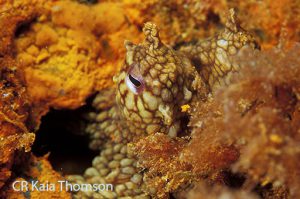
Common Octopus Juvenile, Sea of Cortez. Photo by Kaia Thomson
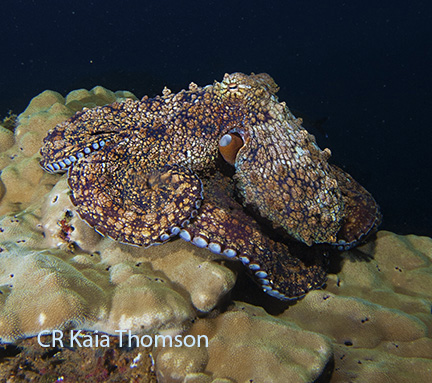
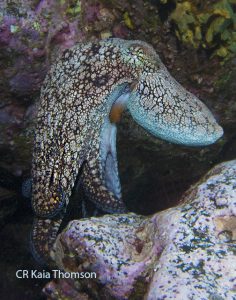
But perhaps of all the cool things that an octopus’s brain/body can do, the most amazing is its ability to disguise itself by almost instantaneously changing not only the color and pattern of its skin, but the very texture of its skin to everything from small bumps to tall spikes to match its surroundings such that even the most determined and observant predator or prey cannot distinguish it from nearby coral, algae-covered rocks, kelp fronds or the sandy seabed. And color also denotes mood. As Sy Montgomery wrote upon meeting an octopus named Athena, “As I stroke her with my fingertips, her skin goes white beneath my touch. Later, I learn this is the color of a relaxed octopus.” Alternatively, “An agitated giant Pacific octopus turns red, its skin gets pimply, and it erects two papillae over the eyes, which some divers say look like horns.”
It is tempting to chalk up the body-changing abilities of an octopus to instinct alone, but Dr. Jennifer Mather, a comparative psychologist who studies octopuses, has found that octopuses use specific disguises for specific species in specific conditions – both offensive and defensive. That is, it is another sign of the octopus’s intelligence. Dr. Mather believes that the octopus’s loss of the ancestral shell is what lead it to develop this intelligence. Being shell-free allows the octopus to be an active predator like a lion, rather than a passive muncher like a clam. But the dozens of different prey species that it hunts require different hunting strategies, just as different strategies are required for defending itself against different predators. Dr. Mather has documented that octopuses will often use what is called the Passing Cloud display – flashing pulses of color that move across the octopus like passing clouds – to startle an immobile crab (one of its favorite foods) into moving and give itself away. To catch shrimp, octopuses have been seen to compress themselves, creep up to the shrimp, extend an arm up and over the shrimp, then touch it – an act which scares the shrimp right into the mouth of the octopus.
Common Octopus, The Pacific Ocean. Photo by Kaia Thomson
On the other side of the equation, if an octopus is being hunted by a hungry fish it might rapidly change color, pattern and shape; fish have strong visual memories for certain images, and if an octopus is rapidly changing from light to dark, from spots to stripes, the fish can’t place it and moves on to something it can identify to eat. But if that psychedelic display is not enough, octopuses have many more tricks in their bag – including the ability of some species to deploy a pseudomorph, a life-size self-portrait made from a cloud of ink and mucus. This essentially freaks out and disorients the predator, allowing the octopus to get away. It seems that octopuses actually enjoy messing with the (lesser) minds of would-be predators. The mimic octopus, rather than making itself look like something passive such as coral or rock to avoid detection, transforms itself to look and act like venomous creatures such as jellyfish, sea snakes and spiky lionfish to send its would-be predator running the other way.
Octopuses also employ tools for defense. Researchers in Indonesia have documented octopuses lugging half coconut shells across the ocean floor, assembling them into spheres, and climbing inside for protection. An octopus at the Middlebury octopus lab found that a sea urchin was hanging around too close to its den so she ventured out, found a piece of flat slate, and erected it in front of her den like a shield.
As Sy Montgomery notes, “…of all the creatures on the planet who imagine what is in another creature’s mind, the one that must do so best might well be the octopus – because without this ability, the octopus could not perpetrate its many self-preserving deceptions. An octopus must convince many species of predators and prey that it is really something else….(then) assess whether the other animal believes its ruse or not, and if not, try something different. “Writes Godfrey-Smith, “When surviving requires decision-making, brains have developed awareness. Sentience,” he notes, “has some point to it.”
Love and Friendship
Common Octopus. The Pacific Ocean. Photo by Kaia Thomson
Montgomery, Godrey-Smith and numerous others have documented that octopuses can readily distinguish different people, even if they are wearing identical uniforms, and that they have very particular feelings about those different people. With people that they like, they will touch them, hold their hands and arms, give them gentle squeezes, and allow themselves to be stroked. They are friendly and engaged and will readily come to the surface of their tank for interaction. People that they don’t like may be subjected to rude squirts of water and – if the visitor is too close – even a bite. But what about with each other? Every Valentine’s Day the Seattle Aquarium hosts the Octopus Blind Date, in which the partition between the tanks of a male and female giant Pacific octopus is lifted and nature is allowed to take its course – six hearts beating as three might be the romantic view. But in 2016 the blind date was cancelled due to fears that the 70-pound male, Kong, would simply find his 35-pound date a tasty snack, a decidedly unromantic outcome. While it was a loss for Seattle’s octopus sex voyeurs, it was a new lease on life for Kong. Mating, while ensuring the survival of the species, is a death knell for male octopuses, who die shortly thereafter. This close link between sex and death might account for some octopuses rather hands-off approach to sex – literally. The males and females of the Algae octopus will find houses next to one another so that the male only has to reach his hectocotylus (sex arm) out his front door and into her’s to get the job done. The Argonaut octopus doesn’t even get that intimate. Males simply detach their hectocotylus and send it off to mate with a passing female.
Female octopuses can lay up to 400,000 eggs, which they attach to the ceiling of their dwelling and lay in long strings like translucent ropes of pearls. They guard and tend their eggs diligently until they hatch. Sy Montgomery reports how her octopus friend Octavia in the New England Aquarium wove her egg chains and tended them with meaningful rituals, even though there was no male to fertilize them. Of course the eggs never hatched and Octavia succumbed to death a few months later, as do all female octopuses once their reproductive cycle is over.
The Octopus’s Garden
Octopuses are the blue bloods of the marine world. Truly. Octopuses evolved a copper rather than an iron-based blood, and it’s the copper that turns their blood blue. Copper is more efficient at transporting oxygen than hemoglobin in deep ocean environments, where water temperatures are low and there is not much oxygen. But this system also means that octopuses are very sensitive to changes in acidity, and when the ocean’s pH gets too low, octopuses can’t circulate enough oxygen. There is therefore a great deal of concern in the scientific community about what will happen to octopuses with the increasing ocean acidification being brought about by climate change.
Octopuses have existed on the earth for at least 296 million years, the age of the oldest known octopus fossil. That’s over a thousand times longer than humans. “The sea is the original birth place of the mind. When you dive into the sea, you are diving in to the origin of us all’” writes Godfrey-Smith. It is perhaps for this reason that Godfrey-Smith dedicates his book to “all those who work to protect the oceans.” As Carl Safina notes, “As we change the world, let’s bear this in our minds: Other minds are living their own lives here with us on earth.”
In Baja California Sur our two oceans, the Pacific and the Sea of Cortez, are filled with many of the 300 species of octopus that inhabit the world, and it is possible to visit many octopus gardens and match wits with these amazing creatures when snorkeling and diving. Jacques Cousteau, who called the Sea of Cortez the Aquarium of the World, tells a charming story in his 1973 book Octopus and Squid: The Soft Intelligence. “Our friend Gilpatric … brought an octopus home and put it in an aquarium, which he then covered with a heavy lid. A short time later, the aquarium was empty, and Gilpatric found the octopus going through his library, book by book, turning the pages with its arms.” And that’s a true octopus story.
It was the days of the Mexican revolution and Juan Cuevas had had enough. La Paz had grown too big and too political for his tastes so he set out to find someplace with no government and no people. A Sea of Cortez fisherman by trade, Juan tried living on the beautiful and unpopulated islands of San Jose and San Francisco; these experiences prompted him to add no mosquitos and no noseeums to his list of requirements. After years of defining his search by what he didn’t want, in 1923 he finally found what he did: El Pardito, a 2.5 acre rock in the Sea of Cortez, 45 miles north of La Paz. There were no structures, no gardens, no electricity, no people, no government, no mosquitos. It was just a rock, and Juan was thrilled. He brought his wife Paula out to El Pardito and in short order they built a wooden house, brought in chickens and pigs and produced 9 children. From that day to this, a Juan Cuevas has lived, worked and loved on El Pardito.
El Pardito. Photo by Carlos Gajon
When Juan found his dream location it was still almost two decades before Jacques Cousteau would declare the Sea of Cortez the Aquarium of World due to its great abundance of marine life. A fisherman living on a rock in the midst of such bounty smacked of genius, and Jacques Cousteau himself once paid Juan a visit on his rock. “Most fishing communities in the days of the original Juan focused on shark fishing as shark livers were the main source of Vitamin B around the world until other sources emerged during World War II. Demand was huge and the original Juan was a big part of this trade” notes Amy Hudson Weaver, a marine biologist with the conservation group Niparajá who lived on El Pardito for 8 months in 1995-1996 and continues to work closely with the family. “Juan was so successful that he was able to build a large house for the family on the Malecon in La Paz so they would have a place to stay during their periodic trips to the city.”
Wealth was not all that the Cuevas family accumulated. Notes Amy, “To successfully hunt sharks you have to know a tremendous amount about them. For example, you have to know when they are pupping so you don’t accidentally interfere with reproduction. That knowledge was handed down among the generations in the Cuevas family, and many shark biologists spend time at El Pardito because the family’s knowledge of sharks is so deep.”
Sharks are just one of myriad species for which the Cuevas family has profound knowledge. Don Croll, the former director of the School for Field Studies and current professor at the University of California at Santa Cruz, has been going to El Pardito for 30 years, and has known the current Juan Cuevas, the 40-year old great great grandson of the original since he was 10 years old. “Juan and his brother Felipe didn’t have much formal education on El Pardito, but their knowledge is astounding. Lots of people can identify a turtle or fish species when they’re holding it in their hands, but Juan and Felipe can identify a species from the boat from really far away, and I rely on them for this. Their marine life capture skills are equally remarkable. When the Monterrey Bay Aquarium needed someone to help them live capture manta rays for their Sea of Cortez display, I didn’t hesitate to recommend Juan and Felipe.”
Luli Martinez with Juan and Felipe Cuevas. Photo by Luli Martinez
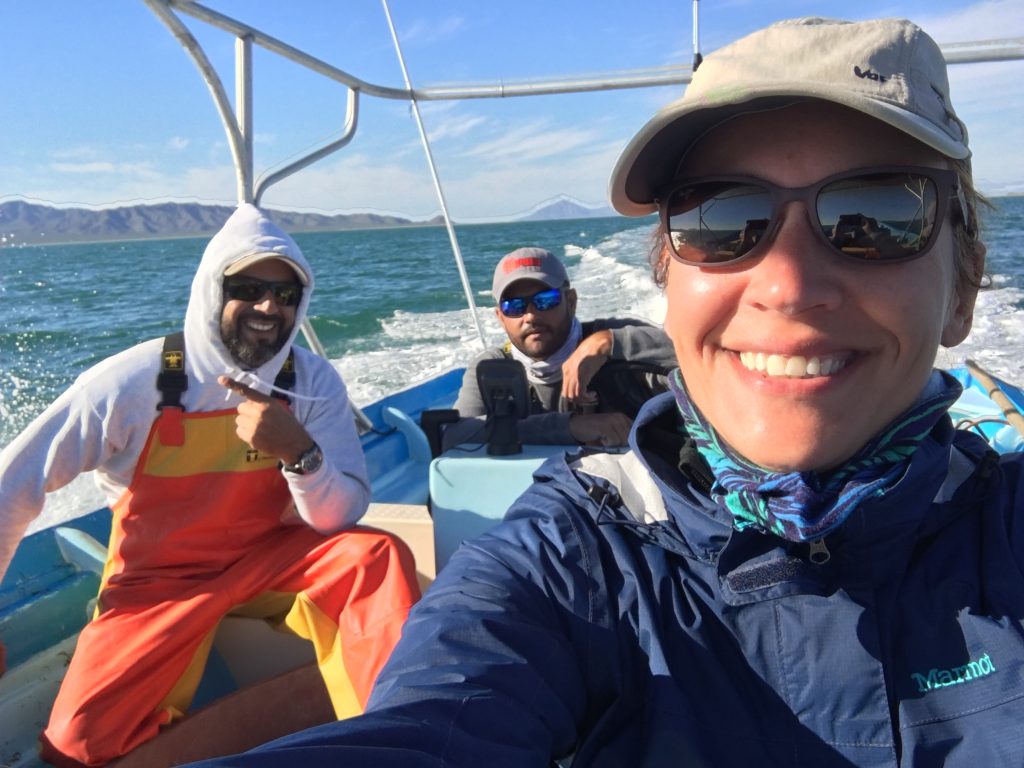
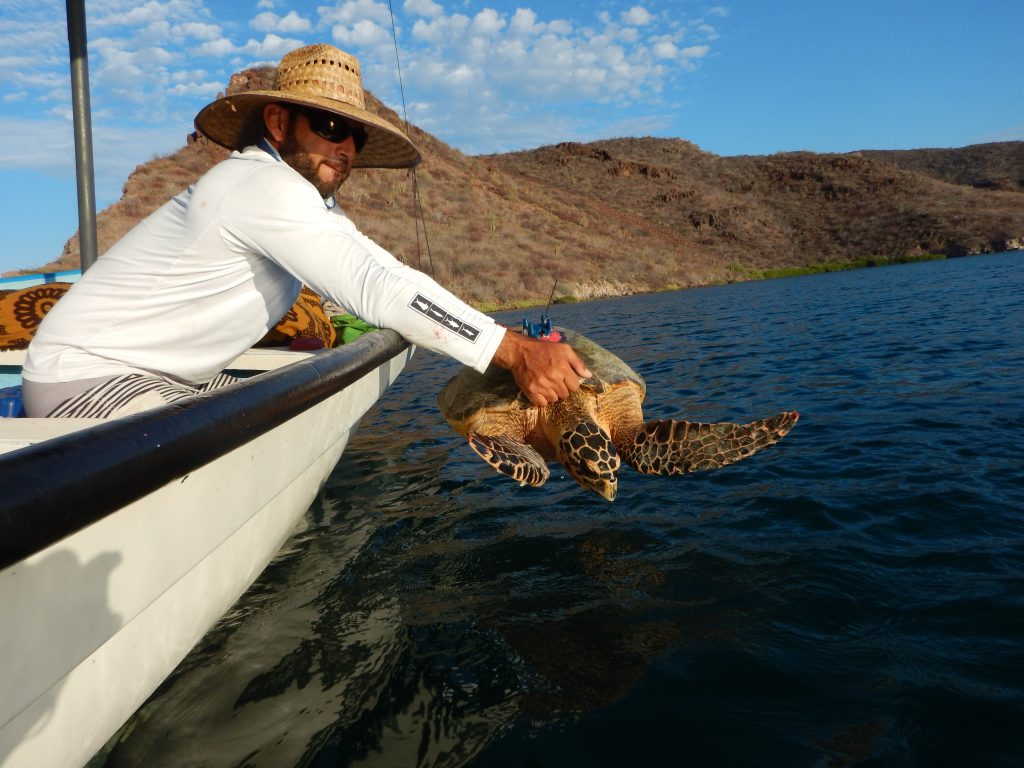
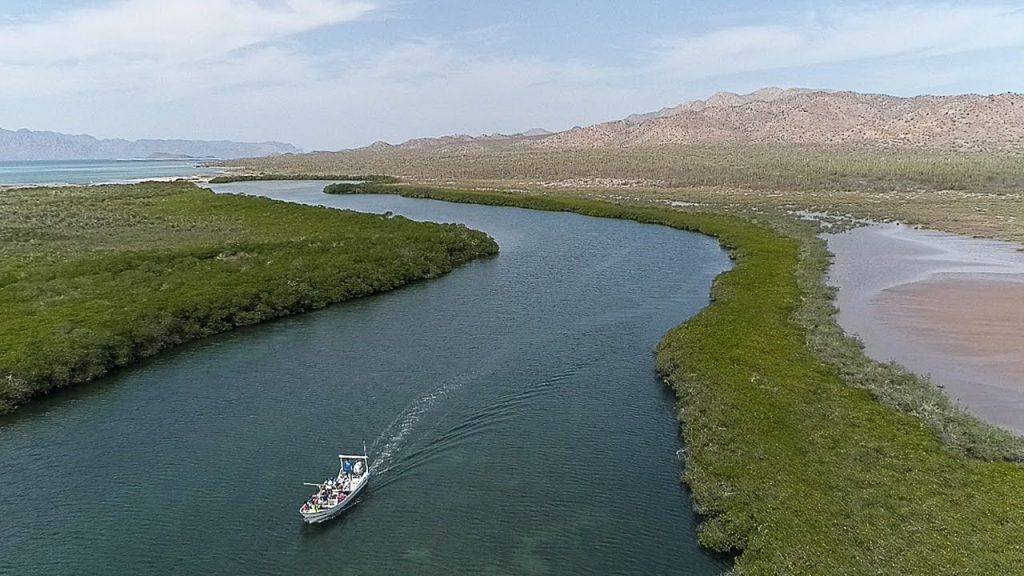
By the time Don’s doctoral student, Luli Martinez, started field work for her Ph.D. on El Pardito in 2014, the great abundance of the Sea of Cortez was a thing of the past. Notes Luli, “The 1970s to 1990s saw the highest use of resources, and sea turtle, shark and other marine life populations began collapsing. When I first started hiring Juan and Felipe to assist me with my conservation research, they were very passionate about marine species but conservation was not where their hearts were at. Then something happened that really changed their perspective. They were helping Don research a manta ray nursery in the mangroves of Isla San Jose when they discovered a population of hawksbill turtles. The Eastern Pacific population of hawksbills is the most endangered hawksbill population in the world, so this was really an important discovery. Hawksbills are not killed for their meat – they’re really not that tasty – but rather for their shells, which are used to make jewelry, and their skin, which is used to make leather goods. In the course of our research on this population Juan and Felipe really took note of the individual turtles, naming them and getting inside their personalities. They developed a sense of belonging to the hawksbill turtles. Now they are not just working for me for a paycheck, we are a team together. They now physically protect the estuary and mangroves of Isla San Jose. They quit fishing in the estuary to recover the population of commercial fish species, and they are proud because the fishing ban protects the turtles too.”
Juan Cuevas tagging and releasing a Hawksbill turtle. Photo by Luli Martinez
Says Juan, “All of us on El Pardito used to be the enemies of conservation. But now years of working with Don, Amy, and Luli has really changed our perspective. We no longer have the luxury of the previous generations of fishermen to catch everything without a thought. We now need to give back to the ocean. We don’t use nets anymore and we’re trying to spread artisanal, hook and line fishing throughout the community. Change requires a lot of patience, diligence and effort, and we’re committed to that. Now 70% of our income comes from conservation work and only 30% from fishing.” Now, rather than catching and killing sharks for the market as the original Juan did, Juan and Felipe use their deep knowledge of sharks and mad freediving skills to tag sharks for researchers like Dr. James Ketchum of Pelagios Kakunjá who is working to protect and recover shark species in the Sea of Cortez.
Estuary of Isla San Jose. Photo by Miguel Angel Aguilar Juarez of Rutafilms
Stephanie Rousso, a marine ecologist who works with Juan and Felipe notes just how far the El Pardito community has come in its relationship to the sea. “El Pardito forms part of the first ever multi-species Fisheries Improvement Project (FIP) initiated by Niparajá and ProNatura to create a system of fish refuge zones for monitoring improvements in fish populations. This FIP was started in 2017 to monitor 33 main species. Participating fishers harvest these species using the more traditional, more sustainable method of hook and line. It is wonderful to see the current generation of fishers in their 30s to 40’s working to replenish the fish stocks and help revive populations overfished by previous generations.”
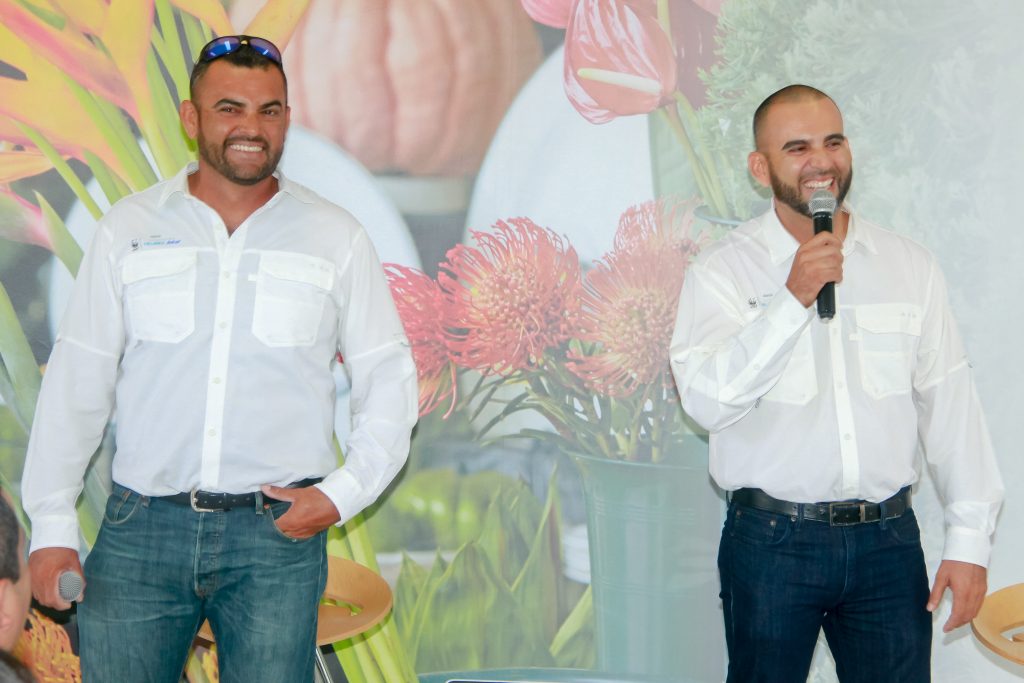
Says Luli, “The success of my hawksbill project is due to the El Pardito community. When I’m invited to give talks in Mexico City by groups like the WWF I take Juan and Felipe with me, and of course the audience loves them much more than me! They are now so well respected by other conservation researchers and they are increasingly in demand.”
Juan and Felipe Cuevas speaking at a WWF event in Mexico City with Luli Martinez. Photo by Alianza WWF Fundación Telmex Telcel
“In demand” seems to be a theme for the Cuevas family. The original Juan might have wanted to get away from crowds, but it seems he was still a social guy. Family lore posits that he had several “wives” in different ports, all of whom produced a good number of offspring. He also developed a strong connection with the community of Las Animas in the mountains of Baja Sur. Amy shares some of the family history she picked up during her 8 months of living on El Pardito. “The Cuevas family needed these large steel hooks for hunting sharks, so they would trade shark, fish and turtle meat with the blacksmith artisans of Las Animas who produced them. When the Las Animas guys were ready to trade, they’d go to the beach closest to El Pardito, light a bonfire to signal the family, then the whole community would sail over. Great parties would ensue on the beach, and this is how El Partido got not only steel hooks, but fresh fruit, vegetables and meats. The ranches in the Sierras were also where the younger generations of Cuevas men would go to find wives. They would sail across to the mainland from El Pardito, hike into the Sierras, then stay for a couple of weeks on the ranches while they courted their sweethearts. This was a very successful strategy.”
El Pardito. Photo by Miguel Angel Aguilar Juarez of Rutafilms
Living on a small rock with the Cuevas family might not seem compelling to all but it appears to be irresistable to most who get the opportunity. Recalls Don, “An American couple, Jaime and Heidi Schultz, were boating near El Pardito in 1976 when they got into trouble. The Cuevas family rescued them and sheltered them on the island. The Schultz’s loved the family and El Pardito so much that they built their own house on the island, and would come down for extended periods every year.” Don, Amy and Luli all understand the pull. “The Cuevas family is my family. My kids have grown up with their kids,” says Don who still brings groups of students to the island every year. “Juan and Felipe are like my brothers” says Luli. “They are my family.” Amy is all in too. “El Pardito is one of my favorite places in the world. I love this family.”
Juan is open to seeing you too. “We are available to anyone who wants to know how to survive in the world. Today so many people live in their phones, not in the world. We have a lot of things to teach people about how to survive outside a city, so please leave your phone at home and come visit us.” The original crowd-shunning, people-embracing Juan couldn’t have issued a better invitation himself.
The global pandemic achieved something that no political movement, no world religion and no pharmaceutical product has ever achieved before: global agreement from the people of all nations, all regions and all walks of life on a single, inherent truth. The year 2020 sucked.
And yet.
There were still moments of joy and revelation, and few can match those experienced by Gustavo Cárdenas Hinojosa, a native of the Baja California Sur town of Constitución and a graduate of the Autonomous University of Baja California Sur (UABCS) in La Paz, one of the best marine sciences schools in Mexico. “My master’s degree at UABCS was on the habitat of beaked, or toothed, whales in the La Paz-Los Cabos region. This is not as easy as it sounds. While 23 species of beaked whales have been documented, they are quite rare to see and we still know very little about them. Unlike the gregarious gray and humpback whales who love to come in close to shore in Baja and spend a lot of time at the surface, beaked whales tend to live really far offshore, in very deep waters, and spend about 90% of their time foraging underwater. When they are on the surface it’s only for a few minutes. All this combines to make them extremely difficult to study.”
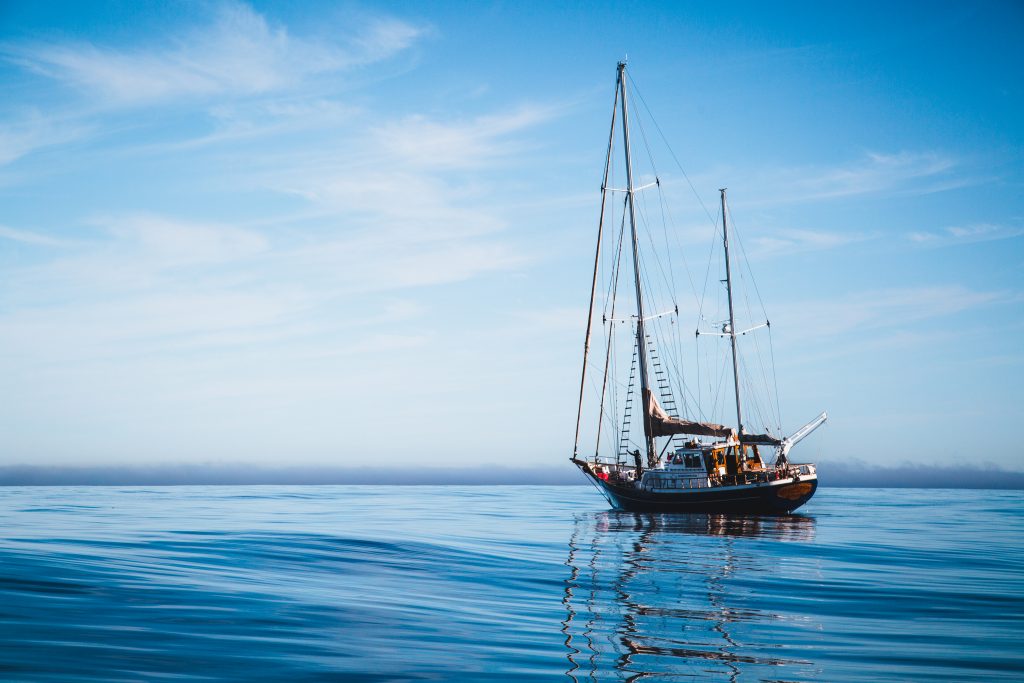
The Sea Shepherd Conservation Society’s vessel the Martin Sheen Photo by Simon Ager of the Sea Shepherd Conservation Society
In fact, the only reason scientists know about one species of beaked whale, Perrin’s beaked whale or Mesoplodon perrinni, is that several dead ones washed up on a beach in the US state of California. They were initially identified as Hector’s beaked whales or Mesoplodon hectori, and only genetic testing proved that they were an entirely new species previously unknown to man. They had never been seen in the wild. They had never been definitively heard either. One of the defining characteristics of beaked whales is that they communicate and hunt via echolocation clicks that are above the frequency of human hearing, and Perrin’s beaked whales are thought to produce a species-specific FM echolocation pulse of BW43. In 2013 BW43 pulses were recorded off the coast of Southern California, but in 2018 Gustavo’s colleagues recorded BW43 pulses from the US-Mexico border south to the mid part of the Baja Peninsula. They had no DNA or visual proof, but they thought this area might overlap with the limited geographic range of Perrin’s beaked whale. Had they stumbled upon the Mesoplodon perrinni in the wilds of Baja’s waters?
Mysterious Beaked Whale Photo by Simon Ager of the Sea Shepherd Conservation Society
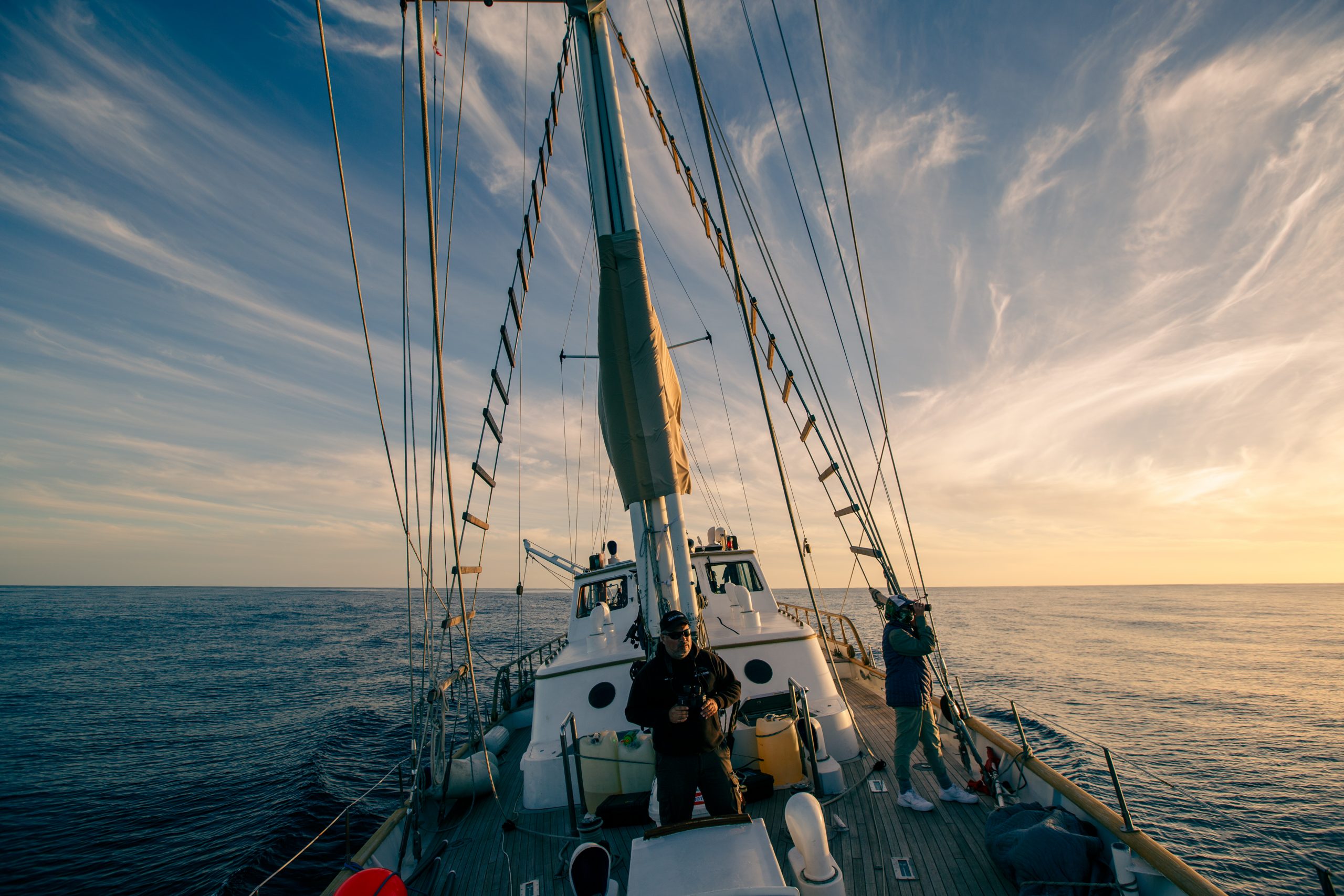
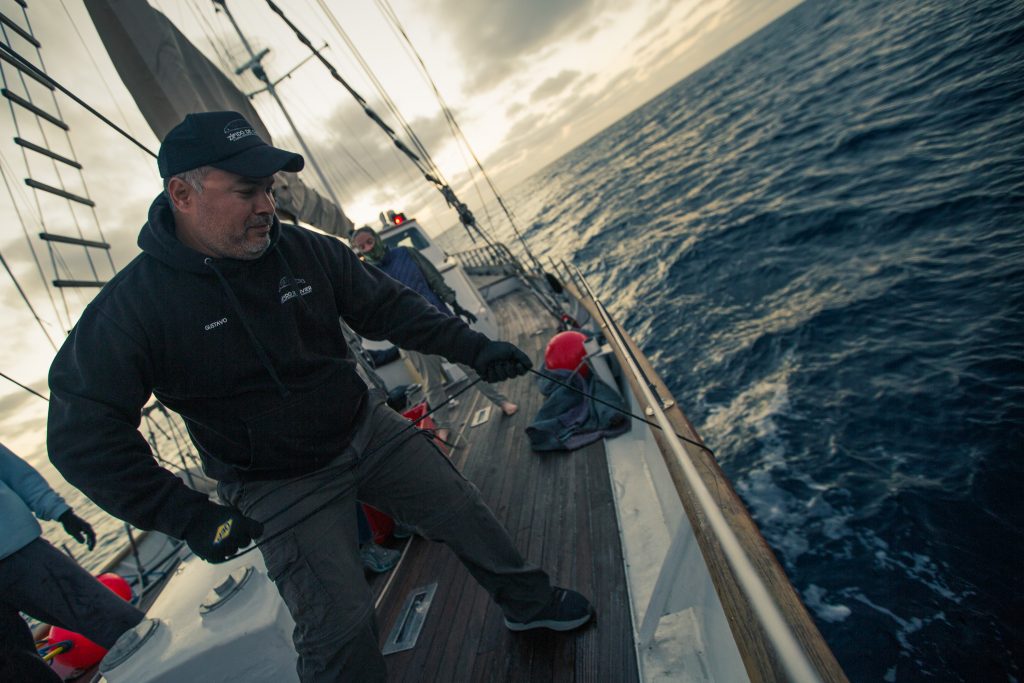
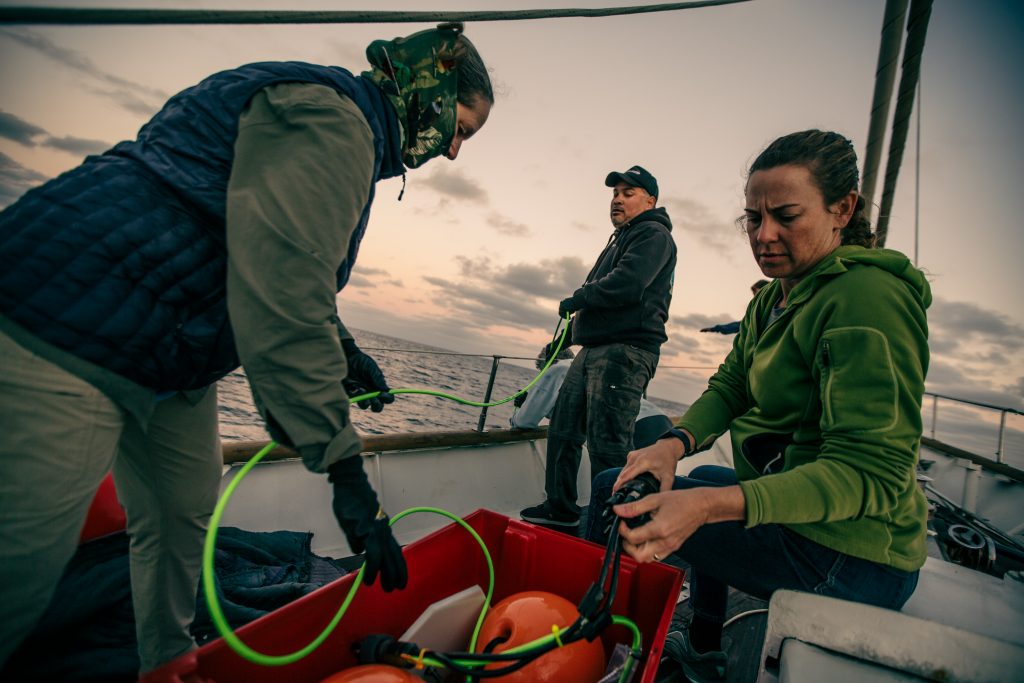
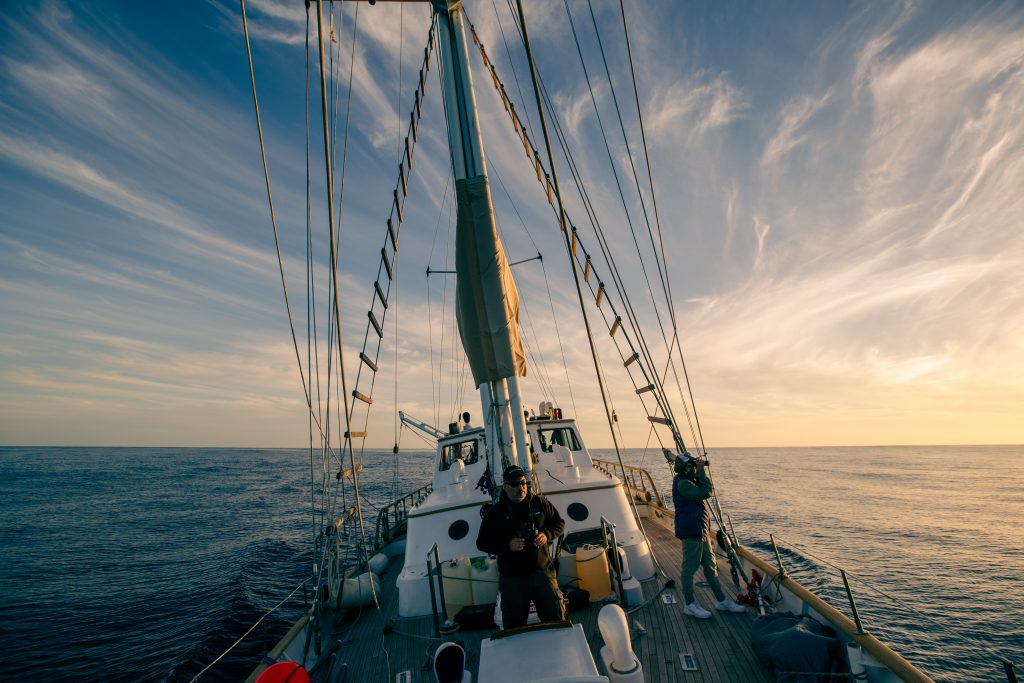
Upon graduation from UABCS Gustavo started working with the Marine Mammal Research Group of the National Institute of Ecology, which became part of CONANP in 2018. He also began work on his Ph.D. at the Centro de Investigación Científica y de Educación Superior, CICESE. Through his work he connected with the Sea Shepherd Conservation Society (SSCS), which has been working for the last several years to protect the critically endangered vaquita porpoise in the upper Gulf of California. In October 2020 Gustavo and his colleagues engineered a 5-year agreement between CONANP and SSCS in which SSCS would provide boat time, equipment and scientific manpower to help CONANP monitor whales in Mexico’s natural protected areas. They did two expeditions to Guadalupe Island to study Cuvier’s beaked whales, then in November 2020 started their third voyage as a team aboard Sea Shepherd’s vessel the Martin Sheen. Their goal was to see if they could finally get a visual and/or acoustic match for those BW43 signals recorded in 2018 to determine if they really did belong to Perrin’s beaked whales.
Gustavo pulling in weighted line with microphone and recorder. Photo courtesy of Sea Shepherd/CONANP.
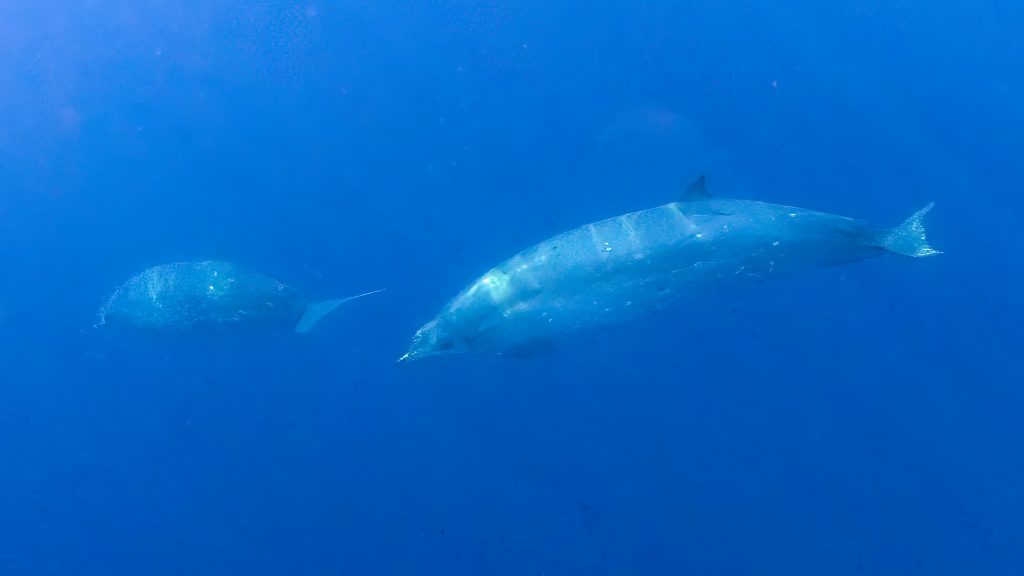
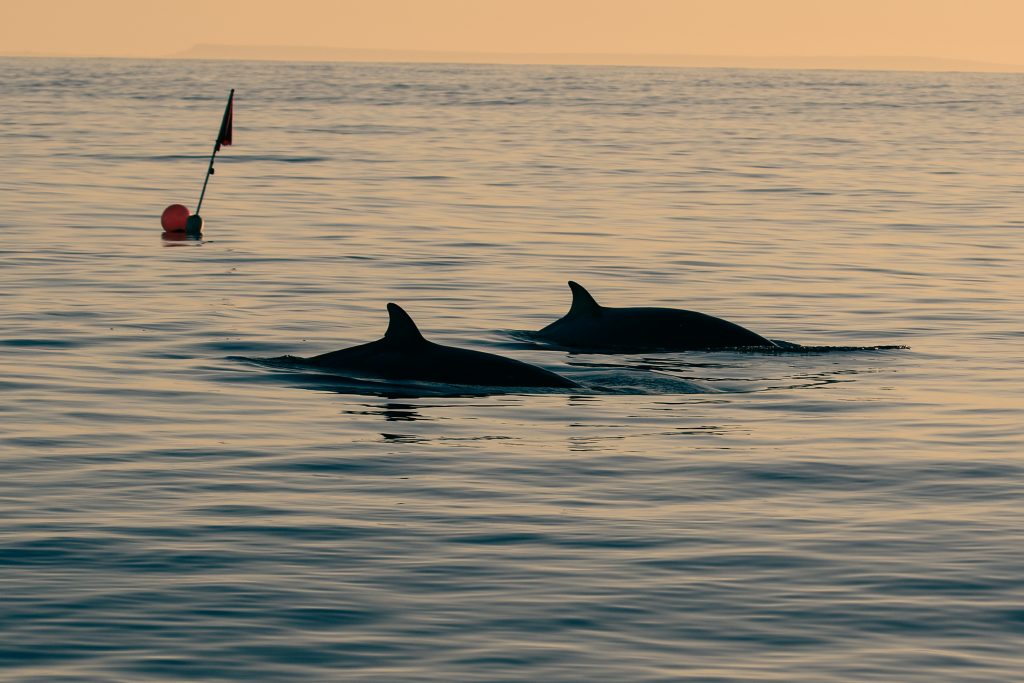
“It was 6:15 AM on November 17, the third day of the expedition, and we were about 100 miles north of the San Benito islands off the coast of Baja when we started seeing marine mammals close to the boat” recalls Gustavo. “It was three individuals and because of their size and their apparent ease at being around the ship, at first we thought they were dolphins. But we started taking photos and deployed a specialized underwater microphone to record their acoustic signals. It was then that we realized that they were beaked whales and it was really amazing because beaked whales almost never come close to ships, and these guys were actually investigating the boat with a great deal of curiosity. It was just incredible.”
Beaked Whales Near the Martin Sheen Photo courtesy of Sea Shepherd/CONANP
More incredible than he could have imagined in fact. “Of course, we all thought that we’d finally found the elusive Perrin’s beaked whale which was amazing enough as one has never been spotted alive. But then we started analyzing the photos and realized that the morphology of these whales was quite different from that of the Perrin’s. One of the beaked whales that we saw was a male, which means that it had teeth in the lower jaw that we could compare to other species. And its teeth were in an entirely different location from those of the Perrin’s. The Perrin’s beaked whale has teeth right at the end of its jaw, while this whale had teeth much further back. Moreover, the acoustic signal we recorded is not BW43. In fact, it is not a sound previously known to science. Add in the fact that there were differences in skin color and size and we realized that not only were these whales not Perrin’s, they were most likely an entirely new species!”
Gustovo and the science team carefully storing the cable and removing the recorder from the array Photo courtesy of Sea Shepherd/CONANP
“We didn’t see any other beaked whales for the remaining two weeks of that expedition” continues Gustavo, “but we did take water samples from the area where we saw the whales and our hope is that there will be some genetic material like sloughed skin that will allow us to analyze the whale’s DNA to determine if they are definitely a new species. But we feel pretty confident that it is.”
So for Gustavo Cárdenas Hinojosa 2020 was definitely a banner year. Not only did he discover a potentially new whale species, he successfully defended his Ph.D. thesis less than a month later and is now, according to the Sea Shepherd web site, “renowned beaked whale researcher, Dr. Gustavo Cárdenas Hinojosa.” But it was still 2020 after all and the genetic testing lab at the National Oceanic and Atmospheric Association (NOAA) – which also had a scientist on the expedition – was closed due to the global pandemic. So Gustavo and his colleagues are just having to cool their heels until the pandemic releases its grip long enough to allow the lab to reopen and test the water samples to see if they have really discovered a new species. When will that be? It’s anybody’s guess, but the potential discovery of Gustavo and his team has given a weary world a happy reminder that the earth still has joyful mysteries to share, that local boys from small towns can still make huge contributions to science, and that in Baja, right when we need them the most, the whales can still be relied upon to appear to fill us with wonder and inspire us with their 50 million years of sustainably inhabiting the earth. It’s almost enough to make you consider 2020 in a new light. Almost.
Gustavo looking for beaked whales on the Martin Sheen Photo courtesy of Sea Shepherd/CONANP


 The Tomorrow’s Air portfolio of carbon removal innovators includes pioneering companies selected for their technical and hybrid nature-tech solutions that can help restore our climate: direct air capture company Climeworks, Pacific Biochar, and Eion enhanced weathering.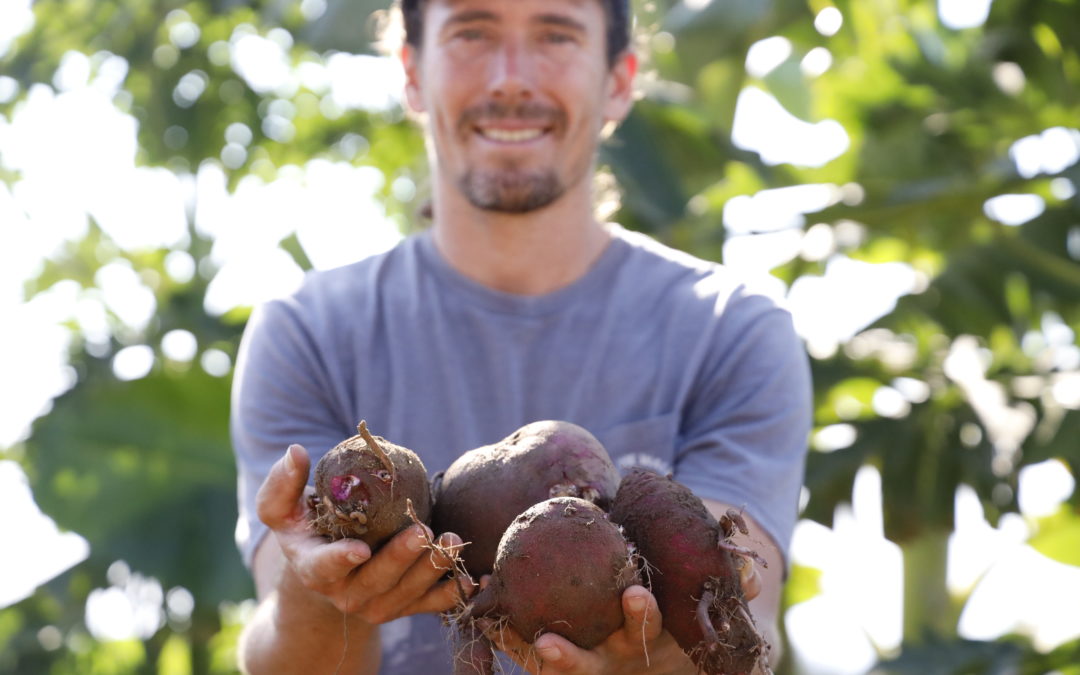
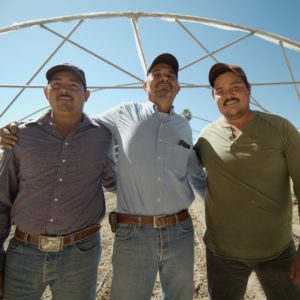 50-year old Felipe Fisher is a successful Baja California Sur farmer who still works the 1.5 hectare-ranch in San Jose Viejo that his great grandparents established in 1901. He started working with his father on the ranch when he was 15 and they, together with the 132 farmers that comprise Productores Organicos del Cabo cooperative, have built a successful business exporting organic basil and cherry tomatoes to places as far-flung as Singapore, Japan, the United States and United Arab Emirates. “But it’s not just the organic farmers who are exporting,” explains Felipe about a startling Baja reality, “Most of the fruit and vegetables that you buy in Costco, WalMart and the large grocery chains in Baja Sur actually come from Sinaloa or other parts of Mexico.”
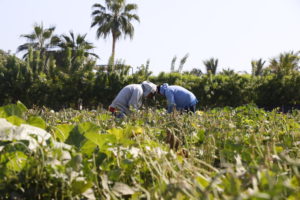 Kelsey and her team are making haste slowly to diffuse this ticking timebomb. Their goal is to facilitate changes in the way farming has been done in Baja Sur since the 1950s, to realign a system that is reliant not only on exports, but also on imported chemicals for soil productivity. To foster change, they are building a network of support for farmers who are interested both in selling locally and improving the health of their soil to obviate the need for agrochemicals. A pilot project was conducted in La Paz municipality in 2021-2022 which revealed that not only is there a lot of interest from the farmers, but also from those whom they serve including food distributors and chefs. They are encouraged, but there are challenges.
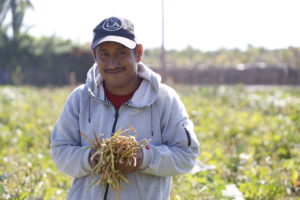 Jan recently completed a two-year regenerative farming pilot project on 4,000 square meters of land in Pescadero. One measure of soil fertility is the percentage of organic matter that it contains, and most of the world’s productive agricultural soils have between 3% and 6% organic matter. When the level is below 3% it is much more difficult to have good yields without using fertilizers and pesticides. Farming regeneratively for just two years between February 2020 and July 2022, Jan and his team were able to double the organic matter in the soil from 0.74% to 1.48%, a dramatic improvement. And since 50% of soil organic matter is organic carbon, it turns out that by improving the soil quality Jan’s project also sequestered 18.33 metric tons of CO2, “which is the emissions equivalent of burning 2,062 gallons of gasoline” he notes.
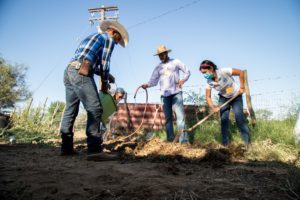 Revitalizing soil comes down to mimicking nature’s processes. “When left to its own devices, nature always covers soil with living plants to generate soil health” says Jan. Andrei and Gabriela, like Jan, therefore started their project with “cover crops” like sunflowers, mesquite trees and fruit-bearing trees like guayabas, bananas, and figs. (Jan also includes corn, sorghum, oats, mustard, mung beans and more). Cover crops, which are dispersed among cash crops, “contribute to soil fertility by improving soil structure with their root systems, recycling nutrients, and accumulating organic matter” says Jan. Just a few months after their cover crops were in place Andrei and Gabriela introduced other crops including lettuce, cucumbers, pumpkins and many others. A large variety of plant species helps defend against pests and diseases while improving the soil structure, which in turn improves the soil’s ability to retain water.
 Kelsey outlines some of the challenges ahead, “It’s not just about the farmers and growing the food, it’s about where the food is going, how it gets there and how it’s prepared once it gets there. We are working hard to understand the local food system, who moves the food around, what consumer requirements are and what is the capacity of the local farmers to meet local demand.”
 “I am so proud and happy about what we achieved in Pescadero” adds Jan. “Of course, there is still so much to do, but I’m super excited about this next phase. I’m building out bigger farms and expanding my regenerative farming operation to feed more of the local community.”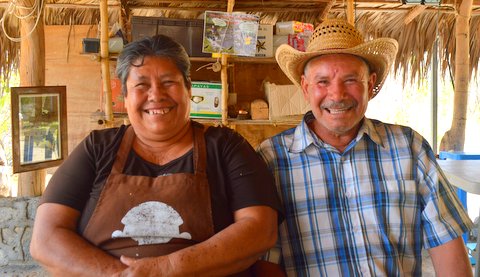
 McClintock and Eve Ewing with Trudi, Fermín and others to showcase the beauty of BCS ranchero culture, the film is centered largely around a family at Rancho San Gregorio in the Sierra de la Giganta above Loreto. In the spring of 2008 a young NOLS instructor named McKenzie Campbell found herself at that same ranch. “I learned how to do leatherwork, make cheese, all kinds of things. I was completely enamored. I then did a week-long scouting trip through the Sierra de la Giganta walking ranch to ranch, and I was completely blown away by the hospitality of the people and their values. They are focused on family, their land and working hard for themselves. They don’t need a lot to be happy. They inspired me to go back to school to get the tools to aid them in the transition to the modern world, to participate in the larger market around them.”